
No products in the cart.
One Piece Manifold vs Regular Manifold for Diesel Engines: The Truth About Performance & Efficiency
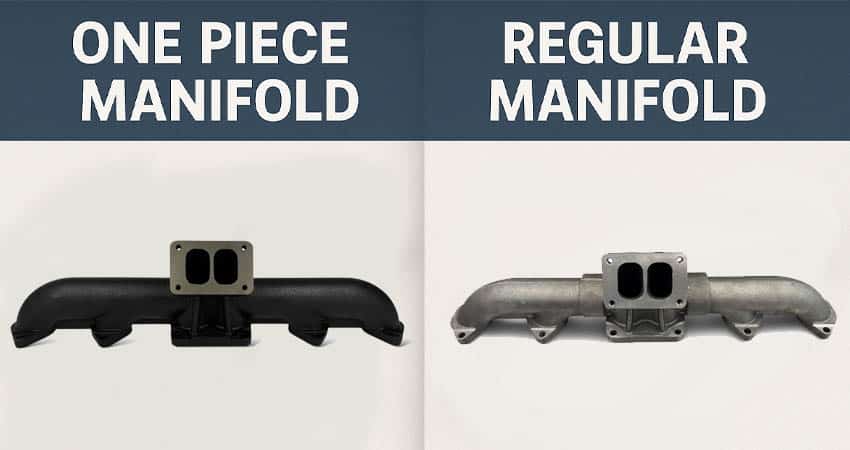
When it comes to optimizing diesel engine performance, the manifold is a key component often overlooked. While turbochargers, injectors, and tuning get all the spotlight, the manifold quietly determines how well exhaust gases flow and how efficiently power is delivered. In recent years, a significant debate has arisen between using a one piece manifold and a regular (multi-piece) manifold. This article explores both types in detail, so you can make an informed choice for your diesel engine.
Introduction to Diesel Engine Manifolds
What is a Diesel Engine Manifold?
In diesel engines, the exhaust manifold collects exhaust gases from the engine’s cylinders and directs them to the turbocharger and eventually out through the exhaust system. It plays a vital role in controlling backpressure, enhancing turbo response, and supporting the engine’s overall efficiency.
Role in Engine Performance
A well-designed manifold ensures even exhaust flow, which reduces lag and increases power output. It also contributes to engine longevity by managing heat and minimizing thermal stress on engine components.
Understanding the One Piece Manifold
Design and Structure
A one piece manifold is cast or machined as a single, solid unit. It has no seams or separate flanges, which helps reduce the chance of leakage or failure. Its robust structure typically makes it more durable under extreme conditions.
Common Materials Used
-
Cast iron: Known for excellent heat resistance and durability.
-
Stainless steel: Offers corrosion resistance and a longer lifespan.
-
Ductile iron: Combines strength and heat flexibility, reducing cracking risks.
What is a Regular (Multi-Piece) Manifold?
Basic Configuration
A regular manifold usually consists of 2-3 separate sections bolted together with gaskets between each piece. This design is more modular and easier to replace or modify in sections.
Use in Older and Custom Applications
Multi-piece manifolds are common in older diesel engines and are often used when frequent maintenance, custom turbo placements, or modular setups are required.
Key Differences Between One Piece and Regular Manifolds
| Feature | One Piece Manifold | Regular Manifold |
|---|---|---|
| Structure | Single solid unit | Multiple bolted sections |
| Heat Handling | Better consistency | Higher risk of warping |
| Leak Risk | Minimal | Higher due to gaskets |
| Maintenance | Less frequent | May require regular gasket replacement |
| Performance | More efficient flow | Slightly restricted due to joints |
Performance Benefits of a One Piece Manifold
Improved Turbo Spool Time
With smoother internal passages and fewer joints, exhaust gases reach the turbo faster, reducing turbo lag and improving throttle response.
Reduced Exhaust Leaks
No gaskets or flanges mean fewer chances for exhaust leaks, which can negatively impact power and fuel economy.
Enhanced Throttle Response
By maintaining a steady flow of exhaust gases, the one piece design ensures more consistent power delivery during acceleration.
Maintenance and Reliability Comparison
Long-Term Durability
One piece manifolds tend to last longer because of their unified design, which reduces the chances of cracking and joint failure.
Gasket and Sealing Concerns
Regular manifolds rely heavily on gaskets for sealing. Over time, gaskets deteriorate due to heat cycles, leading to leaks and reduced efficiency.
Downtime and Repair Costs
While a one piece manifold may cost more upfront, it typically leads to fewer repairs and less engine downtime.
Installation and Compatibility
Ease of Installation
One piece manifolds can be more challenging to install due to their bulk and single-piece nature. However, once installed, they require less attention over time.
Engine and Turbo Fitment Considerations
They are often designed with specific engine models in mind, so compatibility checks are crucial before purchase.
Cost Analysis: One Piece vs Regular Manifolds
Initial Cost Comparison
One piece manifolds are generally more expensive upfront due to their materials and manufacturing process.
Long-Term Investment and Value
Despite the higher cost, their longevity and performance benefits often make them more cost-effective over time, especially for heavy-use vehicles.
Impact on Emissions and Fuel Economy
Heat Management
The consistent structure of a one piece manifold allows better heat control, which can support cleaner combustion and lower emissions.
Combustion Efficiency
Efficient exhaust flow means less backpressure, leading to better air-fuel mixing and improved fuel economy.
Ideal Applications for Each Manifold Type
| Application Type | Best Choice |
|---|---|
| Heavy-duty trucks | One Piece |
| Performance builds | One Piece |
| Fleet vehicles | Depends on maintenance strategy |
| Older diesel engines | Regular manifold |
| Custom turbo setups | Regular manifold for modularity |
Real-World Use Cases and Reviews
Fleet Maintenance Experiences
Fleet operators often report fewer issues with one piece manifolds over extended use, especially in vehicles operating under heavy loads.
Mechanic Testimonials
Many mechanics favor one piece manifolds for their reliability and lower frequency of service.
User Insights from Forums
Online diesel forums often highlight the performance gains and reduced headaches with one piece designs, though they caution about fitment on older engines.
Engineering Challenges and Innovations
Warping and Cracking Issues
Both manifold types can suffer from heat-related damage, but one piece designs—especially those made of ductile iron—are more resilient.
Metal Expansion Properties
Advanced metallurgy and flexible joints in some one piece manifolds help accommodate the expansion and contraction due to heat cycles.
One Piece Manifolds in High-Performance Diesel Builds
Towing and Heavy-Duty Trucks
For consistent power delivery and durability, one piece manifolds are the go-to choice for trucks towing heavy loads or used in commercial work.
Dyno Testing Outcomes
Dyno tests often show modest horsepower gains and better torque curves with one piece manifolds due to improved exhaust flow.
How to Choose the Right Manifold for Your Diesel Engine
Vehicle Use Case
-
Work truck or fleet vehicle? One piece for longevity.
-
Performance truck or race build? One piece for performance.
-
Budget build or daily driver? Multi-piece may suffice.
Performance Expectations
If you’re chasing horsepower or turbo efficiency, the one piece manifold gives you a clear edge.
Budget and Longevity
Regular manifolds save money upfront. One piece manifolds save money in the long run.
Frequently Asked Questions (FAQs)
1. Does a one piece manifold improve horsepower?
Yes, due to smoother exhaust flow and less backpressure, it can slightly increase horsepower and torque.
2. Are one piece manifolds harder to install?
They can be bulkier and require careful alignment, but they’re usually a one-time install.
3. How long does a regular manifold last?
Depending on use, gaskets may need replacing every 50,000–100,000 miles, and cracks may appear over time.
4. Can I replace my regular manifold with a one piece?
Yes, as long as the new manifold matches your engine configuration and turbo setup.
5. Are one piece manifolds worth the extra cost?
If you’re using your diesel engine for heavy-duty or performance tasks, the investment is typically worth it.
6. Do one piece manifolds affect emissions?
Yes, improved combustion efficiency can lead to reduced emissions.
Conclusion
When weighing the pros and cons of one piece manifolds vs regular manifolds, it boils down to performance, reliability, and long-term cost. One piece manifolds offer improved exhaust flow, less maintenance, and better durability—making them ideal for performance and heavy-use diesel engines. Regular manifolds remain viable for budget builds and older engines but often come with more maintenance overhead.
For serious diesel enthusiasts, fleet operators, or performance tuners, the one piece manifold is often the superior choice.
Popular Post

CAT C15 Cylinder Head Torque Sequence – Complete Guide for Rebuilds & Repairs
The CAT C15 cylinder head torque sequence is one o...

How Regular Cylinder Head Maintenance Saves Thousands
The diesel cylinder head is one of the most critic...

Caterpillar Gold vs. Platinum Overhaul Kits
Caterpillar Gold vs. Platinum Overhaul Kits Comple...
Preventive Maintenance Tips for Heavy-Duty Diesel Engines
Heavy-duty diesel engines are built to endure — ...

Leave a Comment