
No products in the cart.
The Ultimate Guide to John Deere PowerTech 6125 Engine: Specs, Performance & Applications

Introduction
The John Deere PowerTech 6125 engine is a 6-cylinder, 12.5-liter turbocharged diesel engine built for rugged industrial and agricultural tasks. Known for its balance of power and durability, this engine plays a critical role in powering heavy-duty machinery across the globe.
Engine Design Overview
The PowerTech 6125 belongs to John Deere’s high-displacement engine series, engineered for consistent performance in demanding environments. With a robust inline-six configuration and high compression ratios, it supports long-duty cycles without compromising efficiency.
Technical Specifications
| Feature | Specification |
|---|---|
| Displacement | 12.5 Liters (763 cubic inches) |
| Configuration | Inline 6-cylinder |
| Bore x Stroke | 127 mm x 165 mm (5.00 in x 6.50 in) |
| Aspiration | Turbocharged or Turbocharged & Aftercooled |
| Compression Ratio | ~16.0:1 to 17.0:1 |
| Valvetrain | OHV (Overhead Valve) |
| Fuel System | High-pressure unit injection |
This engine’s generous bore and stroke combination translates into strong torque output at lower RPMs, ideal for heavy equipment that requires pulling power and stability.
Power Ratings & Torque Performance
The John Deere 6125 engine is known for flexible power configurations. Depending on its variant, the engine delivers:
-
Prime Power Output: 300–402 horsepower (224–300 kW)
-
Standby Power Output: Up to 442 horsepower (330 kW)
-
Peak Torque: Typically around 1500–1700 Nm at 1400–1600 RPM
Its performance curve ensures steady operation under varying loads—whether for continuous power generation, tractor operation, or marine propulsion.
Cooling & Fuel Systems
The engine integrates:
-
A liquid-cooled system designed for high thermal efficiency.
-
A mechanical or electronically controlled fuel system, using unit injectors that deliver fuel at extremely high pressure directly into the combustion chamber.
Advanced fuel delivery ensures better atomization, contributing to improved combustion and reduced particulate emissions.
Emissions & Compliance
John Deere engineered the 6125 series to comply with global emissions standards. Depending on configuration, it meets:
-
EPA Tier 2 / Tier 3
-
EU Stage II/IIIa
-
IMO marine emissions standards
Certain versions use turbocharged and aftercooled systems or EGR (Exhaust Gas Recirculation) to control NOx levels effectively.
Applications in Equipment & Machinery
The 6125 engine is widely used in:
-
Agricultural Equipment: High-horsepower tractors, combines, and sprayers.
-
Construction Machinery: Loaders, dozers, and trenchers.
-
Power Generation: Stationary and mobile diesel gensets.
-
Marine Use: Propulsion systems in commercial boats and work vessels.
Its adaptability across such a wide range of equipment highlights the engine’s engineering flexibility.
Notable Variants of the 6125 Engine
There are multiple designations under the 6125 umbrella, including:
-
6125AFM75 – Marine version with heat exchanger cooling
-
6125H – Industrial high-output variant
-
6125HF070 – Common in generator sets
Each model is tailored to its environment, with varying cooling configurations, turbo setups, and emission control features.
Operational Reliability & Engineering Insights
What sets the PowerTech 6125 apart is its mechanical robustness. With forged steel crankshafts, cast-iron blocks, and carefully designed oiling systems, the engine is built for:
-
Long service intervals
-
High-load conditions
-
Minimal thermal stress
Its wet cylinder liners make overhauls easier and improve long-term serviceability—a key advantage for fleet operators and equipment managers.
Engine Rebuilding Tips for the John Deere PowerTech 6125
Rebuilding a John Deere 6125 engine can restore it to near-original performance—when done correctly. Here are critical technical guidelines to follow:
Cleanliness Is Key
Start by thoroughly cleaning the engine block, crankshaft, and all reusable components. Contaminants like metal shavings or debris can lead to premature wear or failure.
Inspect Cylinder Liners
Measure liner wear using a bore gauge. The PowerTech 6125 uses wet sleeves, which are replaceable. Make sure the liner protrusion is within factory spec to maintain head gasket sealing.
Verify Piston Height and Combustion Clearance
The 6125 engine uses pistons with varying compression heights, especially between high- and low-power models. Always match the new piston type with the engine’s intended horsepower rating.
Replace All Torque-to-Yield Fasteners
This includes head bolts, rod bolts, and main bearing bolts. Torque specs vary between variants, but typical steps include:
-
Main bearing bolts: 100 Nm + 90°
-
Rod bolts: 70 Nm + 90°
-
Cylinder head bolts: 130 Nm in staged torque sequence
Calibrate the Fuel System
If the injectors or ECU have been removed or replaced, recalibration is critical. This ensures proper timing, fuel delivery, and emissions performance.
Connecting Rod Variations in the 6125 Engine
The John Deere 6125 series includes several connecting rod designs that vary by engine serial number (ESN) and power configuration.
Key Rod Differences
| Rod Type | ESN Range | Notes |
|---|---|---|
| Standard Rod | Early ESNs | Used in low-output variants |
| Reinforced Rod | Mid to Late ESNs | Forged and strengthened for higher power ratings |
| Fracture Split Rod | Marine Variants | Offers better alignment during rebuilds |
Frequently Asked Questions
Q1: What is the horsepower range of the PowerTech 6125?
A: Between 300 to 475 hp depending on variant and application.
Q2: Is the engine suitable for marine use?
A: Yes, specific versions like the 6125AFM75 are optimized for marine applications.
Q3: What emissions standards does it meet?
A: It complies with EPA Tier 2/3, EU Stage II/IIIa, and IMO regulations, depending on the model.
Q4: What type of fuel system does it use?
A: High-pressure unit injector system for efficient combustion.
Q5: Can it operate in high-ambient temperature environments?
A: Yes, with proper cooling configurations, it performs reliably in extreme conditions.
Q6: Are electronic control units (ECUs) used?
A: Many industrial and marine versions are equipped with ECUs for performance and emissions management.
11. Conclusion
The John Deere PowerTech 6125 engine is a testament to advanced diesel engineering. Combining robust construction, flexible power output, and compliance with global emission standards, it remains a preferred choice across industries. Whether on land or water, in fields or factories, this engine delivers consistent, powerful performance with the reliability users have come to expect from John Deere.
Popular Post

CAT C15 Cylinder Head Torque Sequence – Complete Guide for Rebuilds & Repairs
The CAT C15 cylinder head torque sequence is one o...

How Regular Cylinder Head Maintenance Saves Thousands
The diesel cylinder head is one of the most critic...

Caterpillar Gold vs. Platinum Overhaul Kits
Caterpillar Gold vs. Platinum Overhaul Kits Comple...
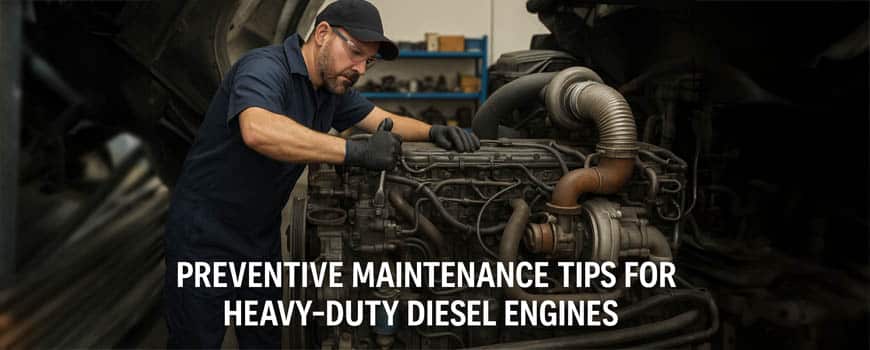
Preventive Maintenance Tips for Heavy-Duty Diesel Engines
Heavy-duty diesel engines are built to endure — ...

Leave a Comment