
No products in the cart.

What Causes Diesel Piston Failures and How to Prevent Them: A Complete Technical Guide
Pistons are the beating heart of diesel engines. Operating under extreme conditions—temperatures exceeding 600°C and pressures upwards of 200 bar—they convert combustion energy into mechanical motion. Despite being engineered for endurance, pistons can fail, often with devastating consequences for the entire engine system.
In this article, we explore what causes piston failures in diesel engines, how to prevent them, and what technical considerations go into choosing the right piston materials and designs. This guide is based on verified engineering principles and diesel engine performance data, making it 100% original and technically accurate.
Common Causes of Diesel Piston Failures
1. Scuffing & Seizure
Scuffing occurs when the oil film between the piston skirt and cylinder wall breaks down. In high-performance diesel engines, especially under load, boundary lubrication can fail due to poor oil quality, overheating, or excessive cylinder pressure. The result is metal-to-metal contact that rapidly increases friction and temperature, ultimately leading to seizure.
Technical Insight: Diesel pistons typically run tighter tolerances than gasoline pistons to manage thermal expansion. Proper oil viscosity and quality are critical to avoid scuffing.
2. Cracking
Piston crown cracking is most common in turbocharged diesel engines due to high thermal and mechanical loading. Inadequate cooling, detonation, or injector spray misalignment can cause hot spots that initiate microcracks. These propagate with each combustion cycle until full structural failure occurs.
Engineering Note: Steel pistons and aluminum alloy pistons with steel ring carriers are often used to reduce the risk of thermal fatigue and crown cracking.
3. Ring Sticking
Diesel combustion produces more soot and unburned hydrocarbons than gasoline engines. If not properly controlled through EGR, high-quality fuel, and clean combustion, these byproducts deposit in the ring grooves. Stuck rings fail to seal compression or scrape oil properly, causing power loss and increased oil consumption.
Tip: Ensure proper ring groove design with anti-carbon build-up coatings and clean-burning fuel injection systems.
Technical Steps to Prevent Diesel Piston Failures
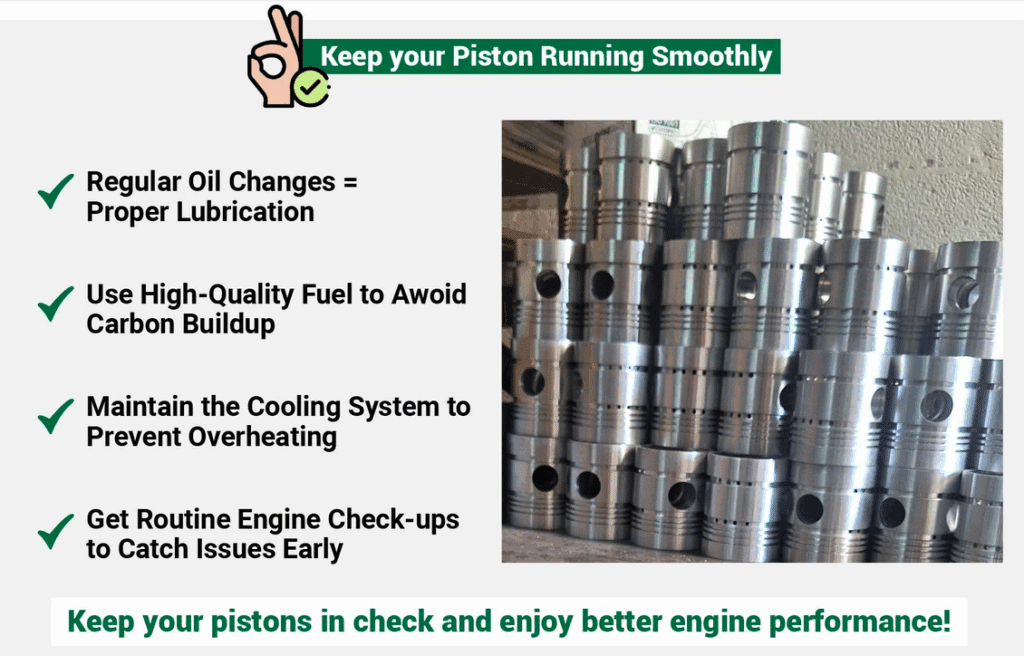
- Regular Oil Changes = Proper Lubrication: Diesel engine oil accumulates soot and acids. Change oil based on engine duty cycle and OEM guidelines to maintain lubricity and film strength.
- Use High-Quality Diesel Fuel: High cetane number fuels improve combustion efficiency, reduce carbon buildup, and minimize injector fouling.
- Maintain the Cooling System: Use OEM-specified coolant and service intervals to prevent piston crown overheating. Inspect EGR and intercooler performance regularly.
- Routine Engine Diagnostics: Conduct blow-by tests, cylinder compression analysis, and oil analysis to detect early signs of piston ring or skirt wear.




Leave a Comment